Dirty Bunny: A Practical Guide to Integrating a Distinctive Display Font into Your Creative Workflow
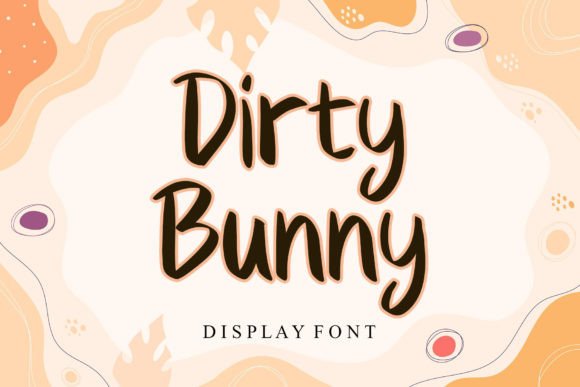
In the crowded landscape of digital design, typography is often the first point of contact between a brand and its audience. While sans-serif minimalism has dominated corporate aesthetics for the last decade, there is a growing demand for typefaces that convey personality, warmth, and human touch. Dirty Bunny emerges as a compelling solution in this space. As a display font, it is not designed for body text or long-form reading. Instead, it serves a specific, high-impact function within the visual hierarchy of a project. Understanding where and how to deploy this typeface can significantly enhance the effectiveness of logos, packaging, and promotional materials.
This article explores the practical application of Dirty Bunny, moving beyond aesthetic appreciation to examine its role in professional workflows. We will discuss how to integrate this font into various stages of the creative process, from initial concepting to final production, ensuring consistency and quality across different media.
Understanding the Role of Display Typography
Before implementing any new asset, it is crucial to understand its functional limitations and strengths. Display fonts like Dirty Bunny are engineered for large sizes and short bursts of text. They rely on unique character shapes, irregularities, or stylistic flourishes to capture attention. Using such a font for paragraphs or small print results in poor legibility and visual fatigue for the reader.
In a typical design workflow, Dirty Bunny fits into the "headline" or "accent" category. It interacts with other typographic choices by providing contrast. If your primary brand font is a clean, neutral sans-serif, Dirty Bunny can serve as the emotional anchor in headers, quotes, or call-to-action buttons. This complementary relationship is key to maintaining readability while injecting character. Professionals should view this font not as a standalone solution, but as a specialized tool within a broader typographic system.
Strategic Applications in Brand Identity and Logo Design
One of the most common use cases for Dirty Bunny is logo design. For entrepreneurs and small business owners, a logo must communicate brand values instantly. The playful yet rugged nature of this font makes it suitable for brands that want to appear approachable, artisanal, or whimsical without sacrificing professionalism.
When developing a brand identity, consider the following implementation steps:
- Initial Sketching: Use Dirty Bunny in early mockups to test tonal alignment. Does the font’s personality match the brand voice? For a bakery, a craft store, or a children’s product line, the fit is often natural.
- Scalability Testing: Ensure the logo remains recognizable when scaled down for social media avatars or favicon usage. Display fonts can lose detail at small sizes, so you may need to simplify the lockup or increase spacing.
- Color Integration: The texture and weight of Dirty Bunny interact differently with various color palettes. Test it against both light and dark backgrounds to ensure sufficient contrast and visibility.
By treating the font as a core component of the brand strategy rather than an afterthought, designers can create more cohesive and memorable visual identities.
Enhancing Packaging and Product Presentation
Packaging design is a tactile and visual experience where typography plays a critical role in shelf appeal. Dirty Bunny is particularly effective in package design for products that emphasize handmade quality, organic ingredients, or festive themes. Whether you are designing labels for artisanal jams, craft beer, or holiday gift boxes, the font can evoke a sense of authenticity.
In a production workflow, compatibility is a major concern. Before finalizing designs for print, verify that the font renders correctly in your design software and that it supports the necessary character sets for your product information. For international markets, check if the font includes special characters or accented letters required for local languages. If Dirty Bunny lacks these glyphs, you will need to pair it with a secondary font that supports them, ensuring a seamless transition between the display header and the regulatory text.
Furthermore, consider the printing method. Textured or irregular fonts can sometimes suffer from ink spread on porous materials like kraft paper. Conducting print proofs is an essential quality control step to ensure the distinctive features of Dirty Bunny remain sharp and intentional.
Crafting Engaging Marketing Materials and Invitations
From wedding invitations to Christmas cards, personal and event-based stationery relies heavily on typography to set the mood. Dirty Bunny offers a versatile aesthetic that can be dressed up or down depending on the accompanying design elements. For wedding invitations, it can add a rustic charm when paired with floral illustrations and soft pastels. For holiday projects, its playful structure complements traditional festive motifs like snowflakes, ornaments, and warm color schemes.
For marketers and bloggers, this font can elevate digital assets as well. Use it for:
- Email Headers: Capture attention in crowded inboxes with a distinctive subject line or banner image.
- Social Media Graphics: Create quote cards or promotional posts that stand out in a feed dominated by standard corporate fonts.
- Blog Post Titles: Add visual interest to article headers, provided the blog’s overall design supports a more decorative typeface.
When using Dirty Bunny in digital formats, ensure web licensing permissions are clear if the font will be embedded via CSS. Alternatively, convert text to images or SVGs to maintain visual consistency across all devices and browsers, avoiding fallback font issues.
Workflow Integration and Efficiency Tips
Integrating a new font into your regular workflow requires organization. Freelancers and agencies often manage dozens of projects simultaneously, making asset management critical. Here are some practical tips for efficient use:
Font Pairing Libraries: Create a reference document or folder containing successful pairings of Dirty Bunny with complementary body fonts. Save these combinations as stylesheets in tools like Adobe InDesign or Figma. This reduces decision fatigue during future projects and ensures consistency across client deliverables.
Template Development: If you frequently create greeting cards or social media posts, build templates that pre-load Dirty Bunny for headlines. This allows for rapid iteration and customization without needing to reinstall or search for the font file each time.
Licensing Compliance: Always verify the license terms for each project. Personal use licenses differ from commercial ones. For client work, ensure you have the appropriate commercial license to avoid legal complications later. Keeping a record of license purchases and permissions is a best practice for professional designers.
Quality Control and Long-Term Usability
Like any design asset, the effectiveness of Dirty Bunny depends on proper execution. Overuse can diminish its impact. Reserve it for moments that require emphasis or emotional resonance. In long-term brand applications, monitor how the font ages. Trends in typography shift, but display fonts with strong character often endure longer than fleeting fads if used strategically.
Regularly audit your designs to ensure that the font is still serving its intended purpose. Is it enhancing readability and engagement, or is it becoming a distraction? Solicit feedback from peers or target audiences to gauge perception. Adjust sizing, spacing, and pairing as needed to maintain optimal performance.
In conclusion, Dirty Bunny is more than just a decorative element; it is a strategic tool for communication. By understanding its constraints, pairing it thoughtfully, and integrating it efficiently into your design processes, you can leverage its unique character to create impactful, memorable, and professional results. Whether you are designing a logo, wrapping a holiday gift, or launching a new brand, this display font offers the versatility and charm needed to connect with your audience on a deeper level.